Heat-resistant RTV-2 silicone for extreme temperatures Silicone rubber is known as one of the most temperature-resistant elastomers. RTV-2 silicone, liquid silicone rubber, and liquid silicone rubber are widely used for silicone mold making , industrial sealing, and potting and encapsulating electronics because silicone remains elastic over a wide temperature range....
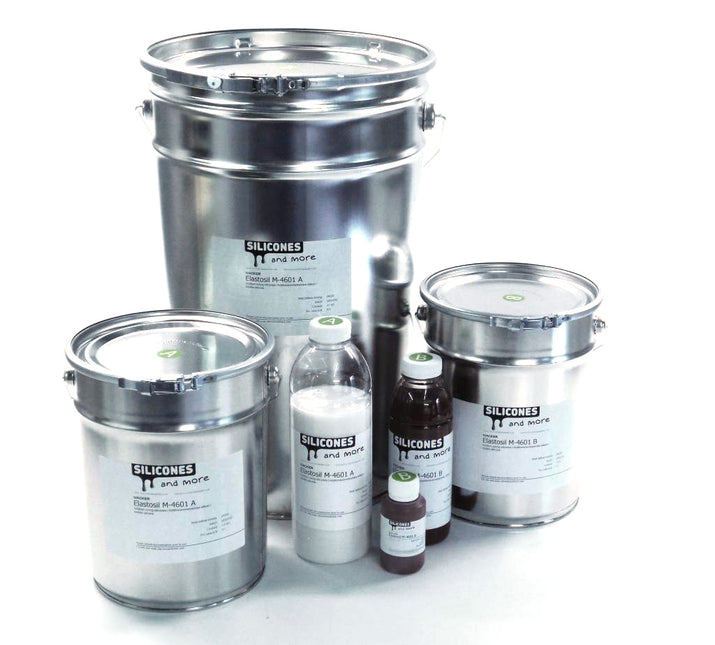
Silicone Elastosil Wacker M 4601 has a good resistance to casting resins (in particular, polyurethane) and low shrinkage. Very suitable for making strong, flexible and non greasy molds. These silicones are ideal for prototyping. Elastosil M 4601 is a two...
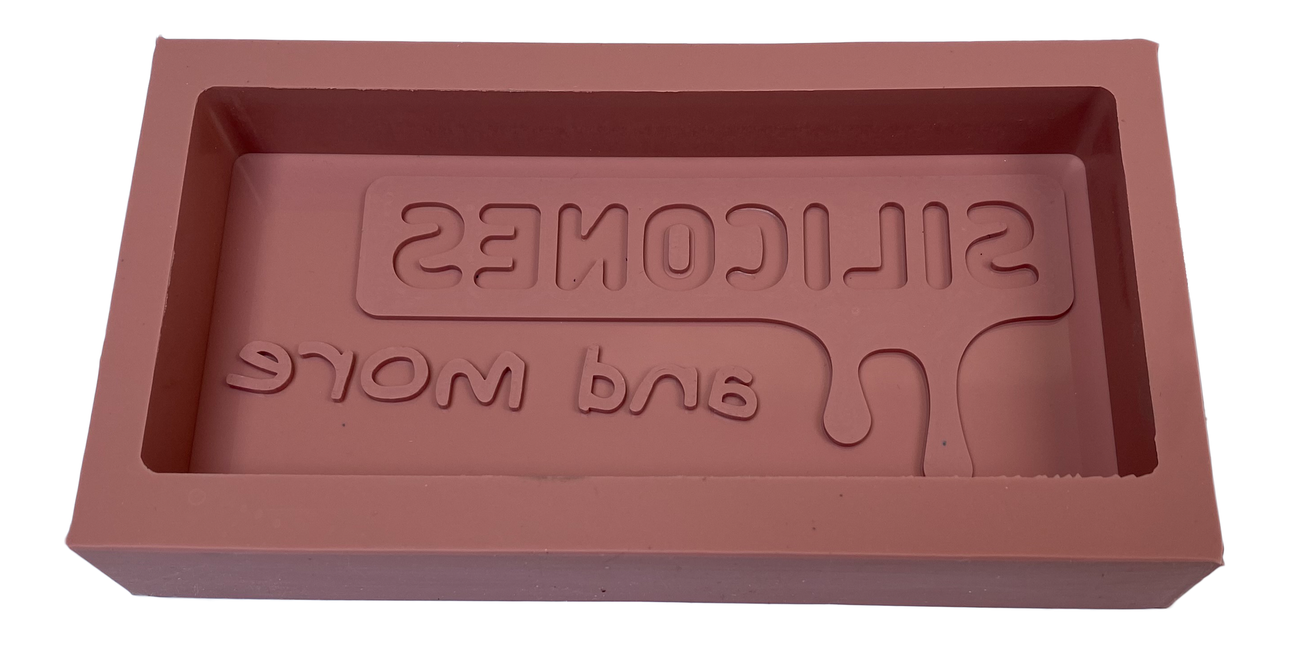
This silicone is very suitable as a mold for casting pewter miniatures or for making your own fishing weights and hooks (fishing lure). Color: reddish brown Easy to mix Briefly heat resistant up to 380°C Very hard, Shore (A) 60...
Pourable, addition-curing, two-component silicone rubber that vulcanizes at room temperature. Main application: Silicone surface for printing rollers, making molds for casting low-melting metal alloys. Food contact (FDA/ BfR compliant). Very good flowability and self-deaeration Fast and non-shrink cure at room...
ELASTOSIL® RT 607 A/B - Flame Retardant RTV-2 Silicone Rubber ELASTOSIL® RT 607 A/B is a castable, addition-curing, two-component silicone rubber (RTV-2) that vulcanizes at room temperature. This high-performance platinum catalyst silicone was specifically developed for professional applications in the...
Heat-resistant RTV-2 silicone for extreme temperatures
Silicone rubber is known as one of the most temperature-resistant elastomers. RTV-2 silicone, liquid silicone rubber, and liquid silicone rubber are widely used for silicone mold making , industrial sealing, and potting and encapsulating electronics because silicone remains elastic over a wide temperature range.
Temperature limits are always product-specific, depending on additives or condensation, fillers in the compound, and how long and how often the material is subjected to thermal stress. Use this page as a practical guideline and, if in doubt, always check your product's data sheet.
Why silicone performs excellently over a wide temperature range
Silicone retains its flexibility because the basic polymer structure remains stable, while many other rubbers harden or degrade. This allows you to use silicone in applications involving:
Many temperature changes
Cold environments (well below zero)
Elevated temperatures around machines, ovens or hot electronics
What does matter in the long run is aging due to heat, oxygen, and stress. Not only the peak temperature is important, but also the time at temperature and the conditions.
Behavior at very low temperatures
As the temperature decreases, silicone usually stiffens somewhat, but often remains quite flexible. What you may notice in practice:
The material feels harder in the cold, especially on thicker parts
Sharp corners and thin edges can tear more easily when bending hard in ice-cold molds
Special formulations can be designed for extremely low temperatures
Practical tips for cold conditions: Avoid pulling hard on thin edges when the mold is still ice cold, design molds with rounded corners and sufficient wall thickness, and allow a mold from a cold room to warm up before intensive demoulding.
Behavior at high temperatures
Silicone can function for a long time at high temperatures, but thermal aging increases with increasing temperature and time. What you may see over time:
The rubber can slowly become harder and less elastic
The surface can age faster due to oxygen and heat
Under constant heat and mechanical stress (clamping, compression), aging occurs faster
Practical temperature guidelines:
Many RTV-2 silicones perform well up to 150-180°C continuously
Around 200°C continuous is often achievable with heat resistant grades with margin
Above 200°C continuous usually requires specialist high temperature compounds
Tips for heat: Avoid hot spots (thin areas overheat more quickly), avoid unnecessary stretching and clamping force during heating, and choose a grade specifically designed for heat.
Extend lifespan in extreme temperatures
1. Post cure - controlled baking
Post cure helps to further stabilize the cure and can provide better heat performance in some systems, especially potting and in molds that frequently heat up.
Practical: Follow the datasheet, build up the temperature slowly, allow the product to fully cure before applying the post-cure, and use the post-cure only if you are working at a really long temperature.
2. Heat stabilizers
Heat stabilizers are used to slow down aging by heat and oxygen at continuously elevated temperatures.
Specific examples: WACKER ELASTOSIL AUX STABILIZER H1, H3, and H4 are stabilizer additives for silicone compounds, primarily used by compounders and industrial companies. For online shoppers, it's usually smarter to choose a high-temperature RTV-2 silicone directly than to mix stabilizers themselves.
3. Thermally conductive compounds
With potting, lifespan is often linked to heat management. Better heat dissipation results in fewer hot spots, which often directly results in a longer lifespan and more stable properties.
Specific examples: CHT SILCOTHERM solutions are silicone compounds with thermally conductive particles for heat transfer. CHT QSil 553 is a potting compound for higher temperatures, useful when working continuously at temperatures around 200°C and need extra margin.
Practical: For potting, choose a ready-made thermally conductive potting silicone rather than adding loose powder filling - this is more consistent and easier to work with.
4. Mineral fillers for shape stability
Mineral fillers don't magically make silicone suitable for much higher temperatures, but they can help with:
Less sagging in heat
Better tear and wear resistance
Better dimensional stability during thermal cycling
Concrete examples:WACKER HDK fumed silica as a reinforcing filler, WACKER quartz as a non-reinforcing filler, and Polytek Fumed Silica as an add-in for silicone rubbers to improve mechanical stability.
5. Reinforcement in molds
With thin blanket molds, frequent demoulding cycles, and temperature fluctuations, cracking is a known life-limiting factor. In these cases, physical reinforcement is often more effective than additional filler.
Example: Polytek TieTex or similar reinforcement fabrics, intended to reinforce blanket molds and thin sections.
6. Pay attention to curing inhibition and contamination
Platinum addition silicones, in particular, can be sensitive to inhibitors. This affects the final heat resistance because incompletely cured silicone degrades more quickly.
Practical: If in doubt, carry out a small test hardening on your substrate, use clean mixing cups, weigh accurately and mix carefully.
Choosing Heat-Resistant Silicone: Mold Making vs. Potting
For mold making and silicone mold making
For mold building you usually want:
Good tear strength and stretch, so the mold does not tear when demolded
Stable shape, so that the detail remains neat
A grade that suits your casting material and temperature load
Caution with hot casting materials: Use a suitable release or barrier coat where necessary (especially with epoxy, PU, and polyester) – this can significantly improve mold life. Avoid extremely thin edges, as these age the fastest.
For potting and encapsulation
For potting you usually want to:
Stable properties at temperature, electrically and mechanically
As few hotspots as possible – thermally conductive variants often help
Good adhesion where needed, or easy to remove depending on the application
Examples per supplier
WACKER high-temperature silicone
Mold Making:ELASTOSIL M 4601 A/B - castable RTV-2 silicone for molding and casting, suitable for mold making
Potting:ELASTOSIL RT 607 A/B - RTV-2 silicone potting compound for elevated temperature applications, choose this type when potting in heat is key
Stabilization: ELASTOSIL AUX STABILIZER H1, H3, H4 for increased heat resistance in silicone compounds. HDK fumed silica and quartz as fillers that support dimensional stability and mechanical stability.
CHT high temperature silicone
Mold Making: QM 262 - RTV-2 platinum addition silicone rubber for mold making, suitable when you want reliable addition curing
Potting: QSil 553 - potting and encapsulation silicone for higher temperature loads, interesting when working continuously at around 200°C
Heat dissipation: SILCOTHERM solutions with thermally conductive particles, aimed at heat dissipation and fewer hot spots
Polytek high temperature silicone
Mold building: PlatSil 73 series - platinum RTV-2 silicone rubbers for detailed molds and production use
Potting: AeroMarine AM150 Silicone High Temp Encapsulation RTV Rubber - used for encapsulation and protection of components where temperature and environmental stress are important
Stability: Polytek Fumed Silica as an additive for increased dimensional stability and tear resistance. Polytek TieTex reinforcement fabric to mechanically strengthen molds during thermal cycling.
Frequently Asked Questions about Silicone and Temperature
Can I use regular RTV-2 silicone at 200°C continuously?
Sometimes yes, but only if the datasheet supports it. Around 200°C continuous, it's wise to choose a heat-resistant grade with a margin, and to consider post-curing if the manufacturer recommends it.
Do fillers help make silicone much more heat resistant?
Fillers primarily help with dimensional stability, tear resistance, and reduced sagging. For true high-temperature performance, the base formulation is crucial. Therefore, a high-temperature grade is usually a better choice than adding a lot of powder yourself.
What is the most important thing to reduce heat aging?
Temperature, time, and oxygen are the most important factors. Fewer hot spots, good heat dissipation during potting, and avoiding mechanical stress during warming often yield the greatest benefits.