
Silicone for Textiles (printing, water-repellent, anti-slip etc)
-
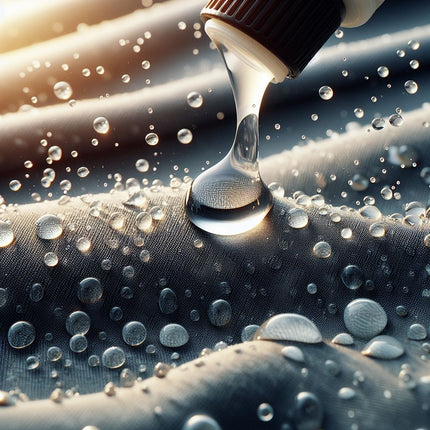
Silicone emulsions for water-repellent textiles
Silicone emulsions for water repellent textiles Silicone emulsions are used in textile finishing to make fabric water repellent or to
-
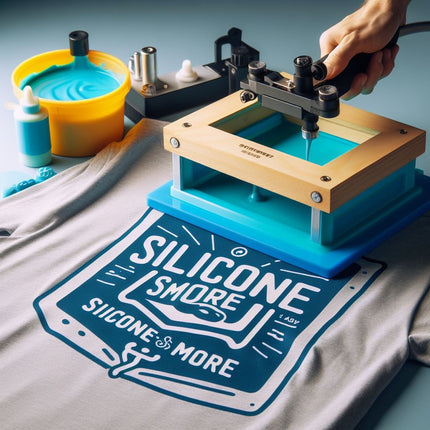
Silicone for textile printing
Printing textiles with silicone Silicones are popular in textile printing because the print is elastic, wash-resistant and PVC-free. With the
Silicones for textiles
Silicones give textiles properties that are hard to achieve with other materials. Think of grip on socks and stockings, elastic, wash-resistant prints, liquid-tight and heat-resistant coatings and a soft or water repellent finish.
Each application needs a different type of silicone. A casting silicone for moulds is not a textile silicone: it is too fluid, does not bond to fibres and has not been tested for washing. On these pages you can read which type suits your application and which products from our suppliers are suitable.
Applications: anti-slip, screen printing and 3D prints, puff prints, embossing, heat transfer, textile coating, water repellent finishing and softeners.
For: textile printers, sock and hosiery manufacturers, technical textile producers, textile finishers and developers of their own formulations.
⚠️ Temporarily an information page
The products on this page are not yet available in our webshop. They can, however, be supplied on request through our suppliers. Send us your application, the textile and the required quantity, and we will prepare a quotation or arrange a sample.
Which application are you looking for?
Anti-slip, coating and heat
Grip on socks, stockings and sportswear, liquid-tight coatings and heat-resistant or flame-retardant coatings. Go to page
Screen printing with silicone ink
Print bases, catalysts, pigments and additives for elastic, PVC-free prints. Go to page
Printing textiles: techniques
Overview of screen printing, 3D and high density, puff, embossing, flock and heat transfer. Go to page
Puff prints
Foaming additives that make the print swell during curing. Go to page
Embossing and relief
Permanent relief in textiles or raised silicone logos. Go to page
Emulsions and finishing
Water repellent silicone emulsions and softeners for textile finishing. Go to page
Three types of silicone for textiles
1. Addition-curing pastes and LSR (2-component, platinum)
The workhorse of the textile industry. Two components, or a base with catalyst, that cure in an oven or drying tunnel in a few minutes at approx. 100 to 180 °C. No by-products are released and the pot life is often hours to days, ideal for screen printing and knife coating. Drawback: the platinum catalyst is sensitive to inhibition by sulphur, tin compounds and amines, among others.
2. Condensation-curing RTV-1 (1-component)
Ready-to-use silicones that cure with atmospheric moisture. Suitable when no oven is available or for small runs. Many types release acetic acid while curing, so ensure good ventilation. Curing is slower than with 2K systems; steam or heat speeds up the process.
3. Silicone emulsions and fluids
For finishing fabric and yarn: softeners based on amino-functional silicones and water repellent emulsions. They are applied by padding (foulard), exhaustion or spray, then dried and cured.
Which supplier offers what?
| Supplier | Textile applications |
|---|---|
| CHT | Anti-slip, textile coating, screen printing, puff, 3D prints, heat transfer, flock and finishing (water repellents and softeners) |
| Wacker | Anti-slip, liquid-tight coating, heat resistant and flame retardant coating, pigment pastes and finishing (water repellents and softeners) |
| Nanotech | Print bases and coating, catalyst and additives, colour pastes, puff and embossing |
| BRB | Silicone emulsions for textile finishing |
| AToro | Silicone fluids and silanes for your own formulations |
| Zhermack and Polytek | Addition cure silicones as mould material for embossing |
What to look for with silicones on textiles
- ✓Adhesion: cotton usually works well, polyester and polyamide often need an adhesion promoter or a modified catalyst. Always test on your own fabric.
- ✓Inhibition: finishes, sizings and auxiliaries on the textile can disrupt the cure of platinum systems. Wacker, for example, warns about silane sizings on glass fabric.
- ✓Full cure: assess wash resistance and grip only after full crosslinking, not straight out of the oven.
- ✓Hardness: softer gives more grip, harder gives more abrasion resistance and a drier top layer.
- ✓Skin contact and certification: request from us, per product, the certificate your customer requires, for example OEKO-TEX Standard 100. Not every product has it.
Frequently asked questions
Can I use ordinary mould-making casting silicones on textiles?
No, we advise against it. Casting silicones are too thin, penetrate through the fabric, bond poorly to synthetic fibres and have not been tested for wash resistance. Use a silicone that the manufacturer offers for textiles.
Why are there no products on these pages?
Textile silicones are usually supplied per project and in industrial packaging. We are building up this range. Until then, we supply the products mentioned on request.
What information do you need to give good advice?
The type of textile and its composition, the application, the application method (screen printing, knife, dispensing, padding), whether an oven is available, skin contact or certification requirements and the expected annual quantity.
Can I get a sample?
Often, yes. Whether a sample is possible, and in what packaging, varies by manufacturer. Request one together with a description of your application and we will look into it.
Related categories
Advice or a quotation for textile silicones
Email info@siliconesandmore.com.
Product information is based on the manufacturers' technical data sheets, brochures and websites (as of September 2026). Values are typical values and not a specification. Always consult the current TDS and test on your own textile and process. ELASTOSIL is a trademark of Wacker Chemie AG, ALPATEC and ALPAPRINT are trademarks of CHT, SILME and CSILFLEX are trademarks of Nano Tech Chemical Brothers.